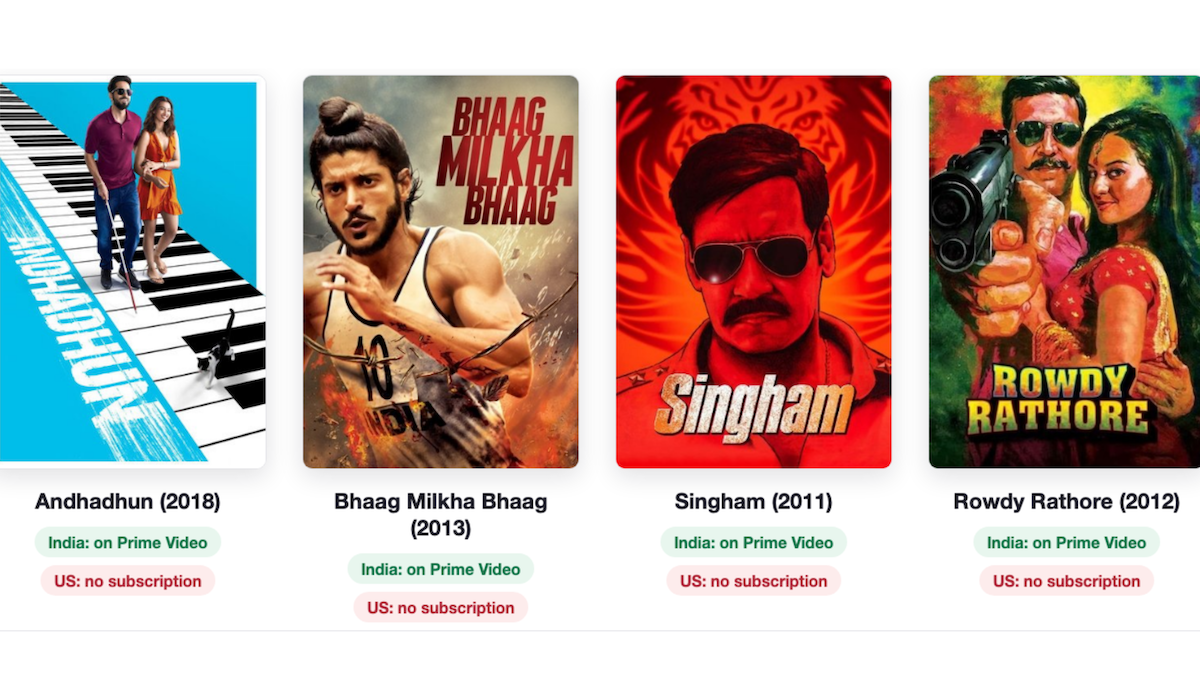
On a Friday night last year, my family decided to rewatch the Bollywood comedy-thriller Andhadhun, starring Ayushmann Khurrana. We remembered it being a masterpiece of suspense and dark humor—the perfect choice for a cozy night in. Twenty minutes later, we were still searching for it. Netflix, which we were certain hosted the film, didn’t have it. Prime Video showed it as “not available in your location.” Even our backup digital libraries came up empty.
This experience is a common frustration for the South Asian diaspora living in the United States. While your mother in Mumbai can flip through a dozen streaming apps and find almost any Hindi blockbuster at the touch of a button, the reality for viewers in America is vastly different. At Trendslr, we’ve taken a deep dive into the complex world of international media rights to understand why the digital bridge between Bollywood and its American fans remains so broken.
The Great Licensing Labyrinth
The primary reason you can’t find Andhadhun or other Bollywood hits in the U.S. boils down to one word: licensing. Content licensing is a territory-by-territory business. When a production house like Yash Raj Films or Dharma Productions releases a movie, they don’t just sell “streaming rights” globally in one go. Instead, they slice the world into regions—India, North America, UK, UAE, etc.—and sell the rights to the highest bidder in each zone.
A movie might be a “Netflix Original” in India because Netflix India paid a premium for exclusive rights there. However, in the United States, that same movie might have been licensed to a smaller, niche distributor or caught in a legal limbo where no one has purchased the rights yet. This leads to the “now you see it, now you don’t” phenomenon that plagues Indian-American viewers.
The Platform Wars: Fragmenting the Library
A few years ago, the landscape was simpler. If you wanted Bollywood, you went to Netflix or Eros Now. But as the “Streaming Wars” intensified, every major Indian media house launched its own platform. Now, we have Zee5, SonyLIV, Disney+ Hotstar, and JioCinema. At Trendslr, we’ve observed that this fragmentation has made it harder for US audiences to access content.
For example, Disney+ Hotstar was once the go-to for many Indian fans in the US. However, Disney decided to shut down the standalone Hotstar app in the US, migrating its sports content to ESPN+ and its entertainment content to Hulu and Disney+. During this migration, thousands of titles were lost in the shuffle. Many movies that were easily accessible in Mumbai remained in a digital “no-man’s-land” during the transition, and some have never returned to the US catalogs.
The Cost of the Diaspora Market
From a business perspective, the Indian market is massive, with over 1.4 billion potential viewers. Platforms are willing to pay astronomical sums for rights in India because the sheer volume of subscribers justifies the investment. In contrast, the South Asian diaspora in the United States, while affluent, is a much smaller demographic.
Streaming giants often perform a cost-benefit analysis. If the licensing fee for a blockbuster movie in North America is too high, and they don’t believe it will bring in enough new subscribers to cover that cost, they simply pass on it. This leaves US viewers staring at a “Content Unavailable” screen while their relatives in Mumbai enjoy the latest releases for a fraction of the cost.
The Rise of Geo-Blocking and the VPN Struggle
To enforce these territorial licenses, platforms use geo-blocking. This technology identifies your location via your IP address and restricts the content library accordingly. This is why your Netflix “Continue Watching” list might look completely different when you land at Chhatrapati Shivaji Maharaj International Airport compared to JFK.
While many tech-savvy viewers turn to Virtual Private Networks (VPNs) to bypass these restrictions, streaming services have become increasingly sophisticated at detecting and blocking VPN traffic. At Trendslr, we advocate for legitimate access to content, but we understand the desperation that drives fans toward these workarounds. When a culture is as vibrant and fast-moving as Bollywood, being “left behind” feels like a loss of connection to one’s roots.
The Cultural Disconnect: Why It Matters
The inability to stream movies in real-time creates a cultural disconnect. Bollywood isn’t just cinema; it’s a conversation. When a movie like Animal or Jawan releases, the global Indian community wants to participate in the discourse simultaneously. When US audiences have to wait months for a legal streaming option—or worse, never get one at all—they are excluded from the collective cultural moment.
Furthermore, this scarcity often drives people back toward piracy. For a decade, the industry fought hard to move viewers away from “DesiTorrents” and illegal streaming sites toward polished, high-quality platforms. By making content difficult to access legally, the industry risks undoing years of progress in copyright protection.
Will the Gap Ever Close?
There is some hope on the horizon. As Indian cinema gains more “crossover” appeal—witnessed by the global success of RRR—American platforms are beginning to see the value in acquiring global rights rather than regional ones. Netflix, in particular, has started to move toward a “Global Release” model for its big-budget Indian acquisitions.
However, until the “Mumbai Model” of consolidated, affordable streaming reaches the shores of America, the Friday night struggle will continue. For now, Indian-American cinephiles are left to juggle four different subscriptions, check third-party “Where to Watch” databases, and hope that their favorite childhood classic hasn’t vanished into the licensing void.
At Trendslr, we will continue to monitor these shifts in the entertainment landscape. The demand for Bollywood in America is higher than ever; it’s time the supply chain caught up with the audience’s passion.